- Project
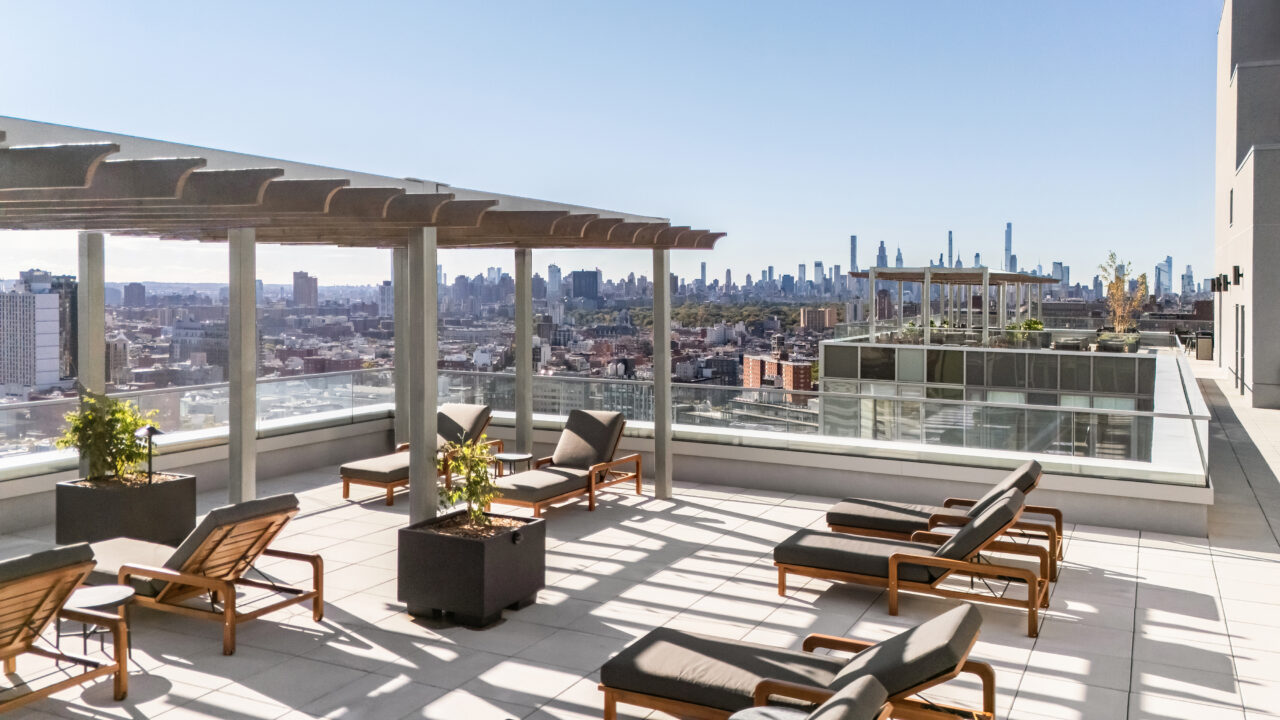
- 1440 Amsterdam
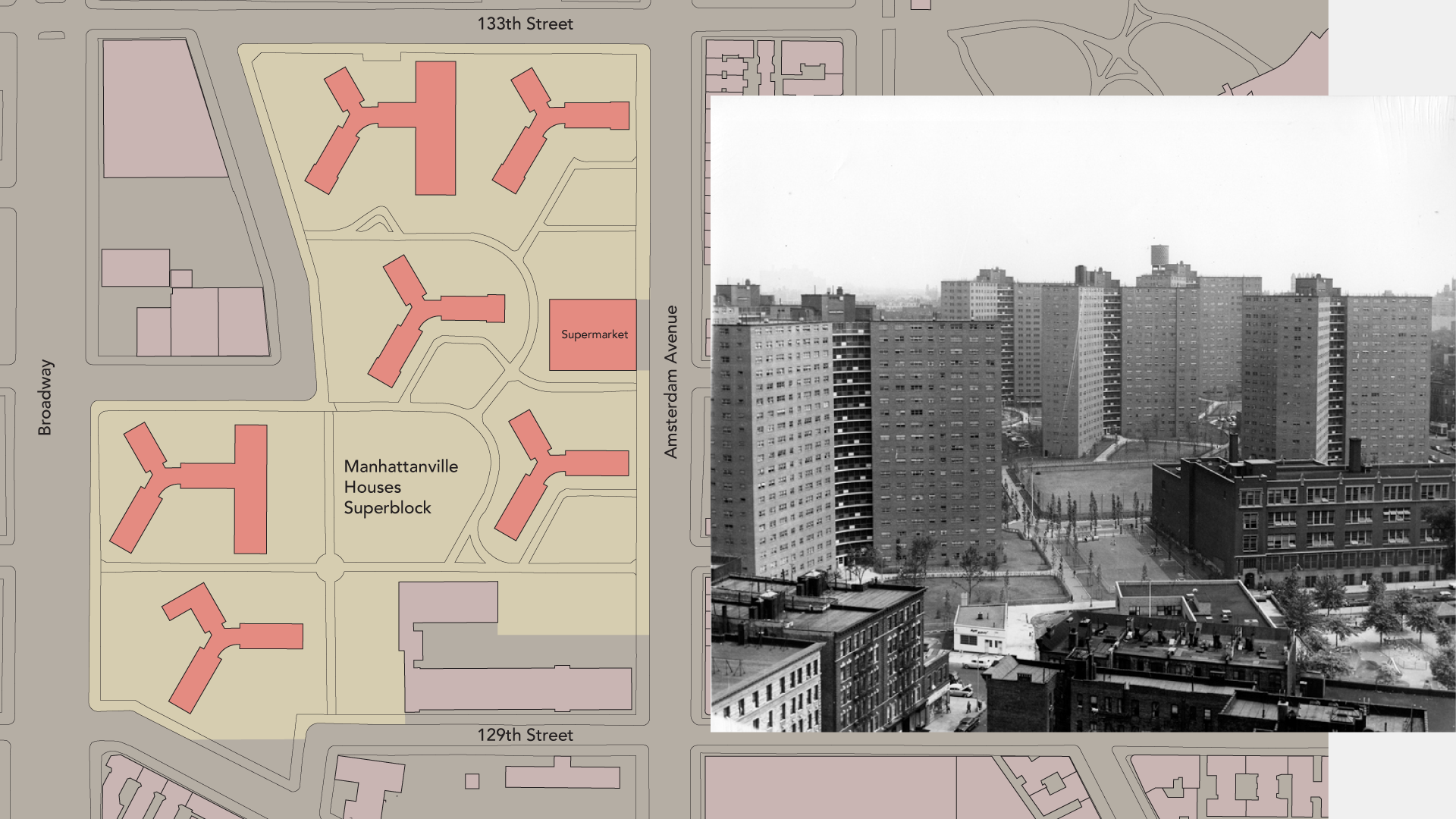
Manhattanville Houses (circa 1962) built a total of 1,272 new dwelling units.
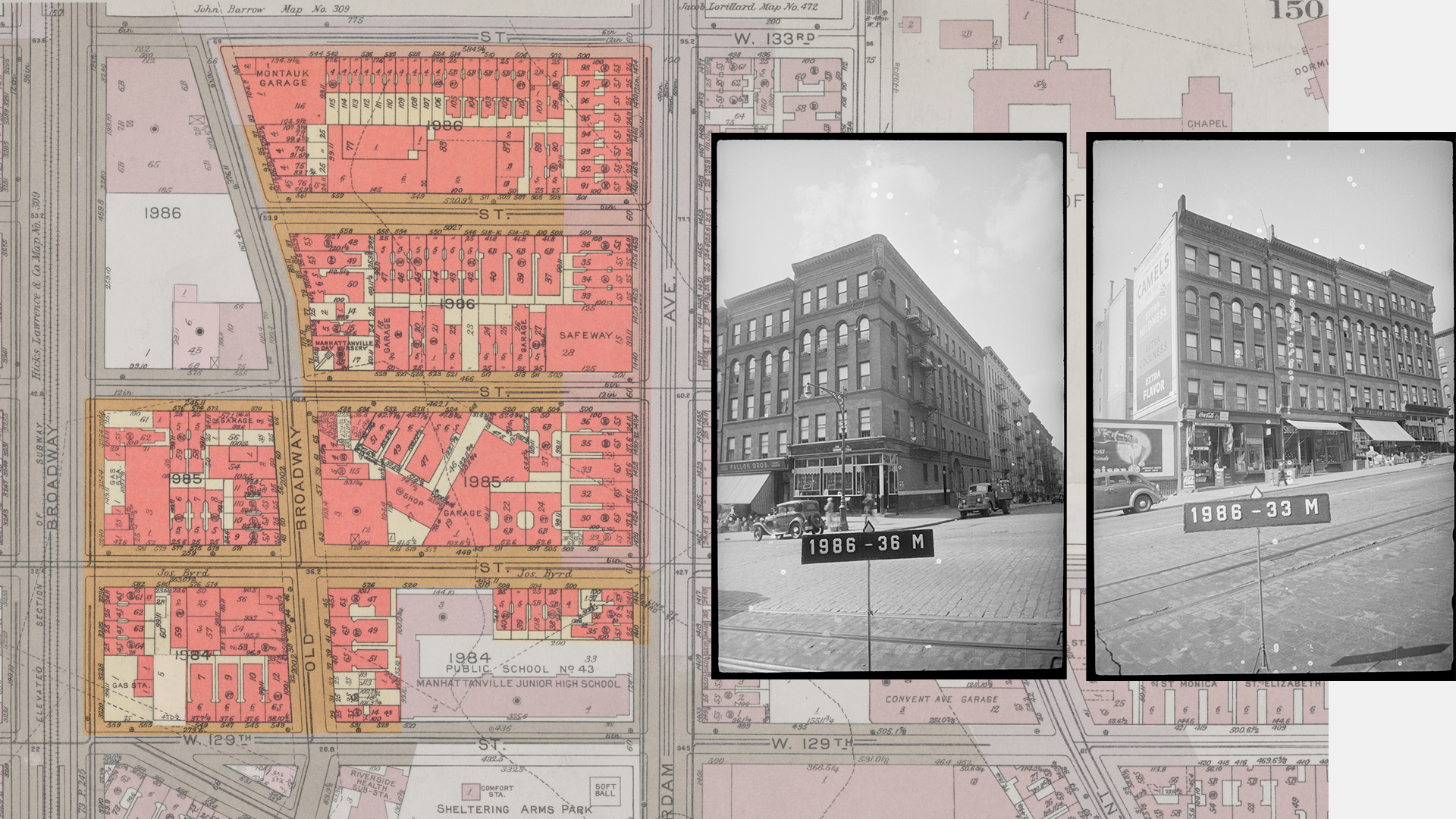
Manhattanville in 1940. According to the 1950 U.S. Census, there were around 1,500 dwelling units.
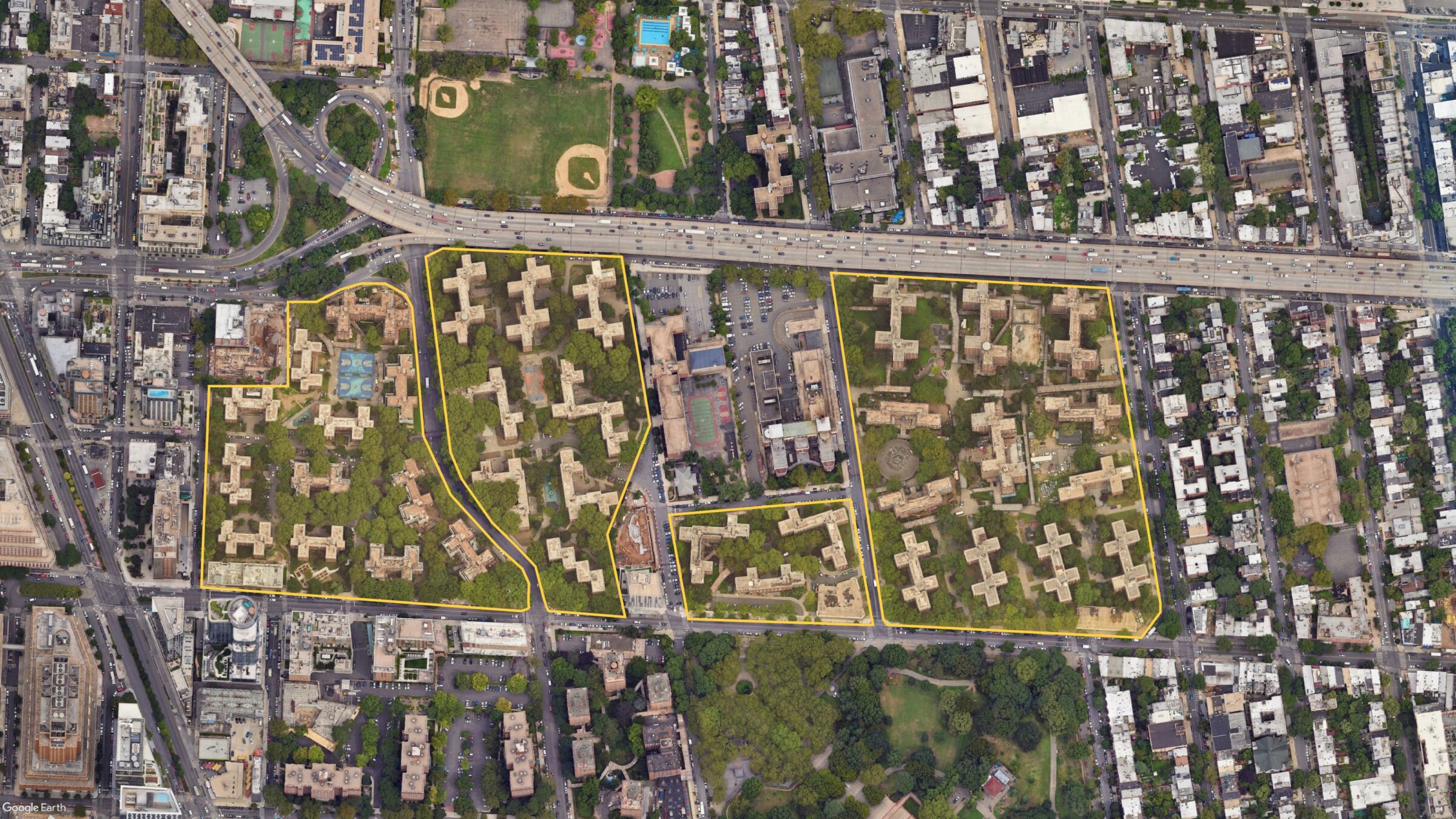
Designed by modernist architect William Lescaze and completed in 1961, Manhattanville Houses replaced a dense grid of four- to six-story tenements, most built around the turn of the 20th century. The 535,000-square-foot superblock comprises six 20-story buildings containing 1,272 units. Emphasizing open space, light, and air, the development did not utilize the maximum floor area permitted by zoning—an approach typical of mid-century public housing. What remained was a different kind of city: towers in the park, standing apart.

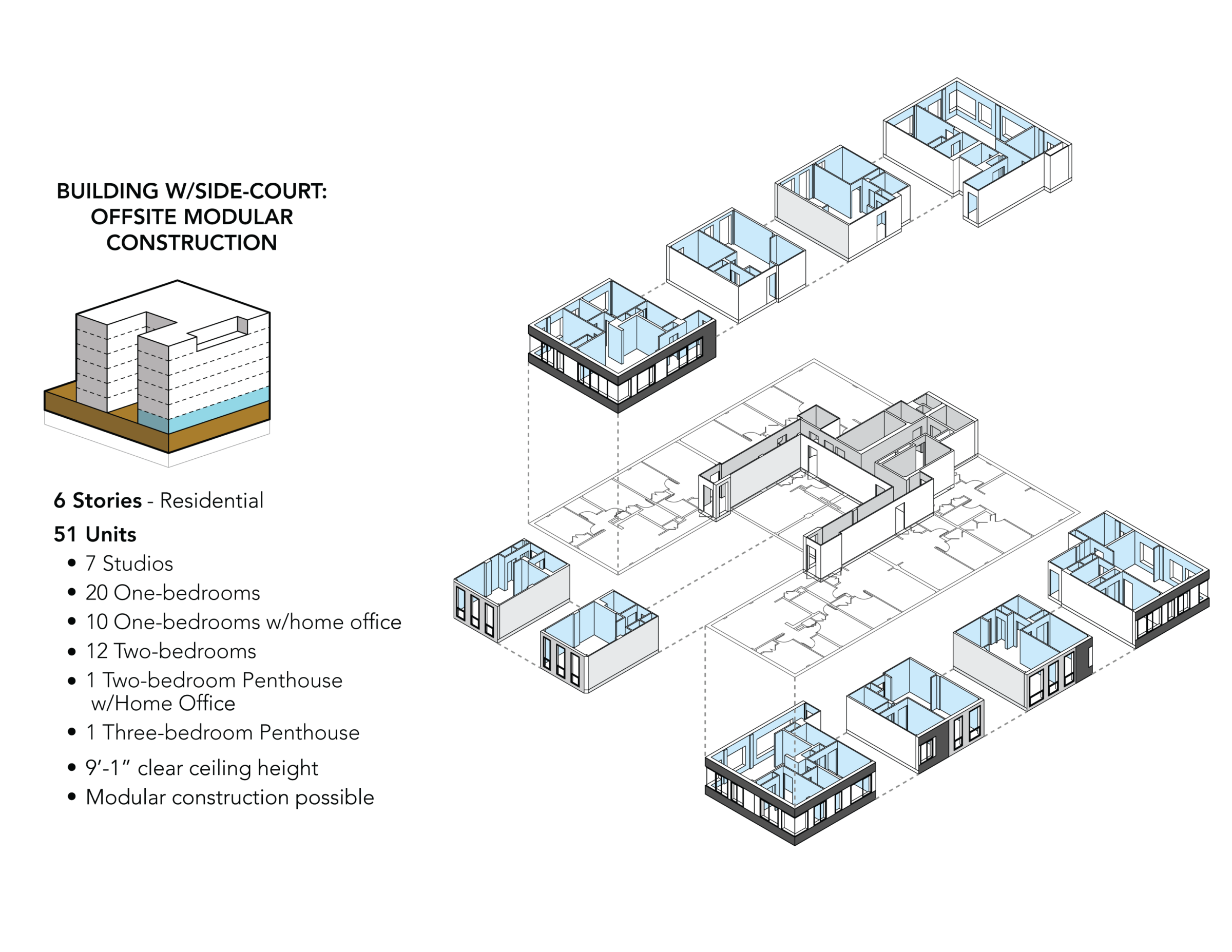
In November 2013, a fire destroyed the supermarket that had occupied the small privately owned parcel at the edge of the complex. The burned-out lot could only support a six-story, 51-unit building, designed by GLUCK+ within the constraints of existing zoning. It was a reasonable building—contextual in height, useful in program—but it barely registered against the scale of what surrounded it. Most importantly, the neighborhood needed more housing and the site had more to give.
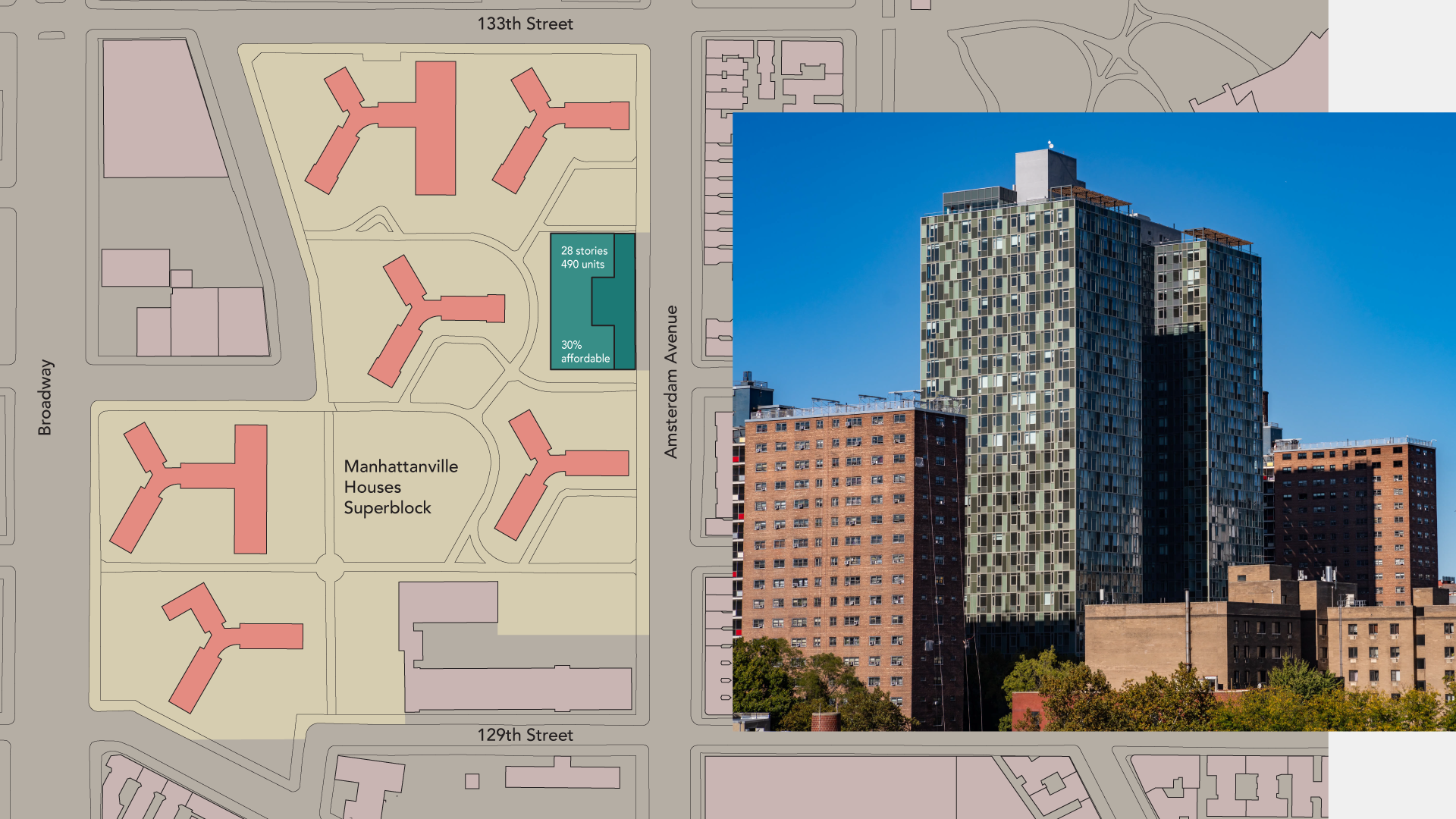
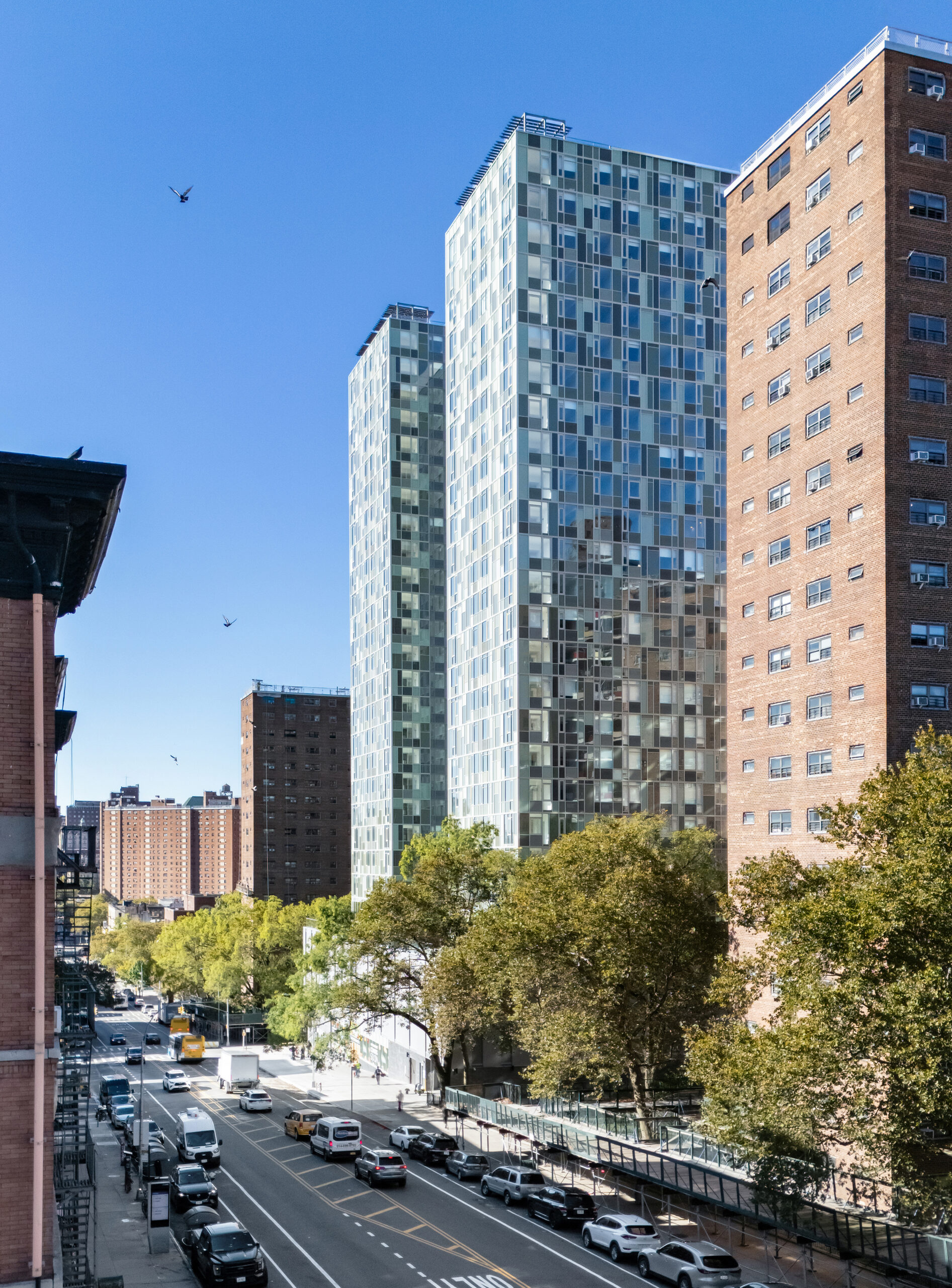
1440 Amsterdam was made possible through a land acquisition and development-rights transfer between a private developer and the New York City Housing Authority (NYCHA). Already owner of the vacant lot, the developer acquired the adjacent NYCHA parking lot—adding 100 feet of street frontage—and purchased 280,000 square feet of unused air rights from the public-housing campus, channeling $28 million directly back into Manhattanville Houses for long-overdue repairs. The building delivers 490 new apartments, 30% of which are regulated by the Department of Housing Preservation and Development (HPD) middle-income affordable housing program.
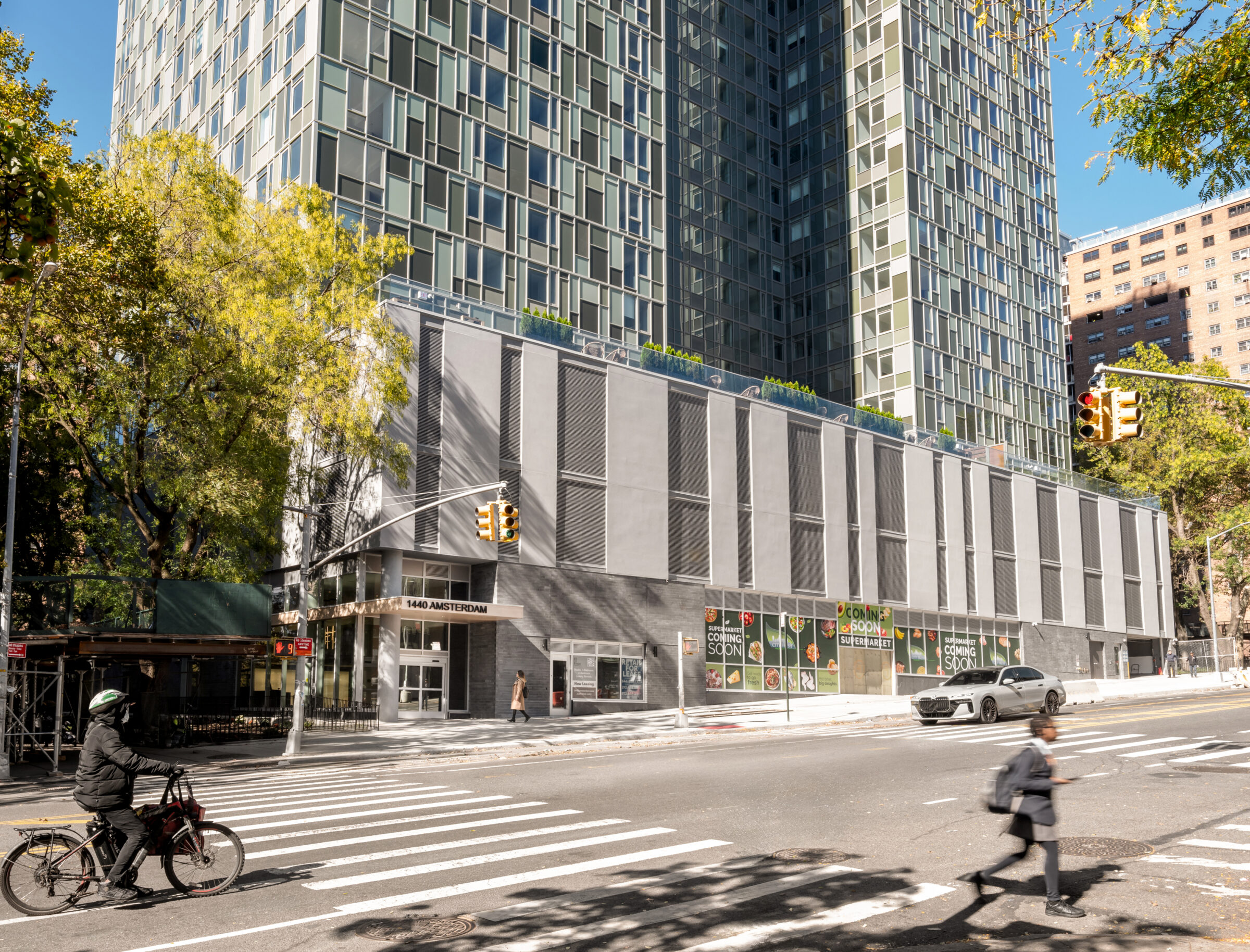
The same local supermarket that burned in 2013 reopened on the ground floor, returning to the neighborhood it had served for decades.
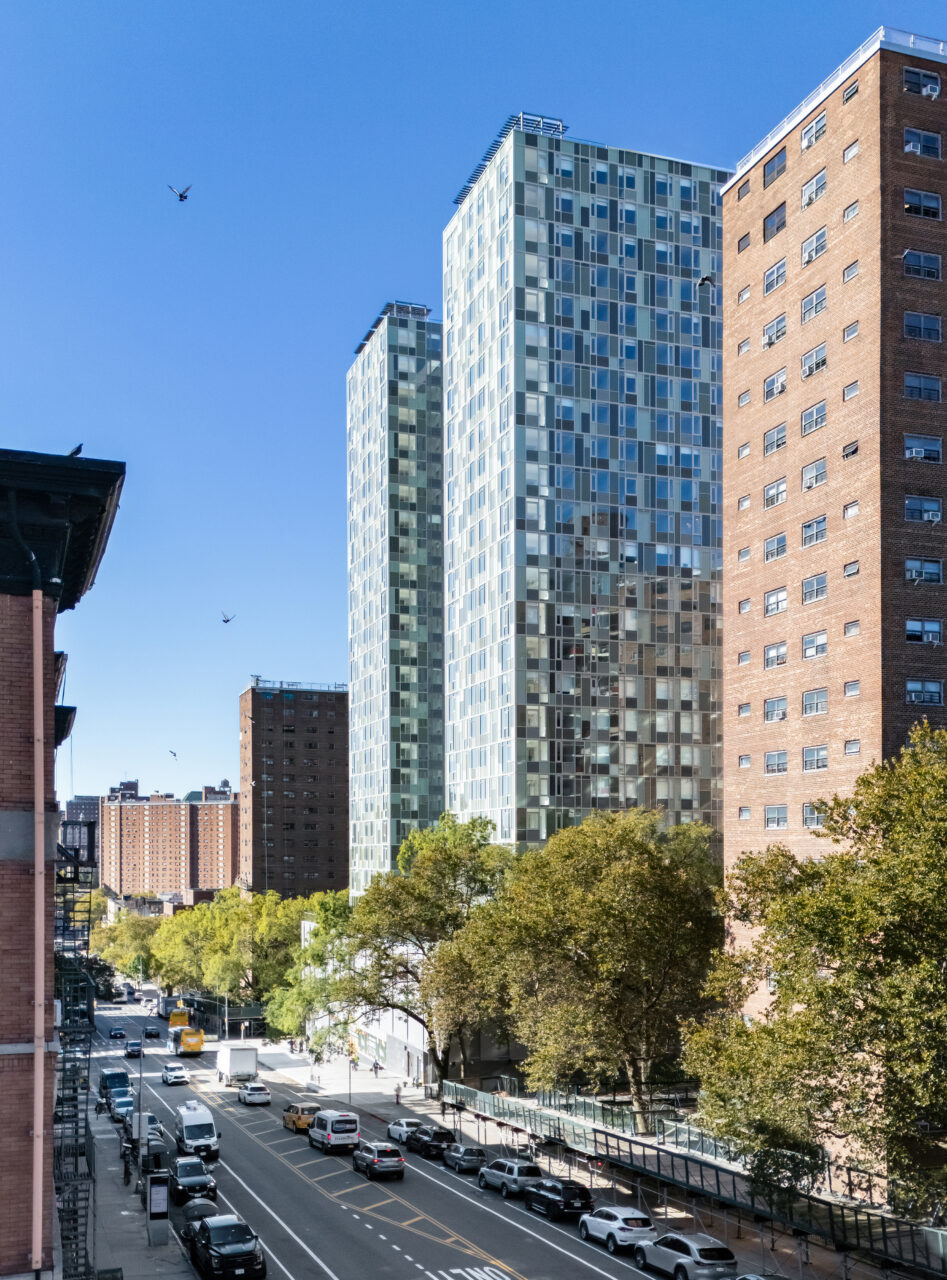
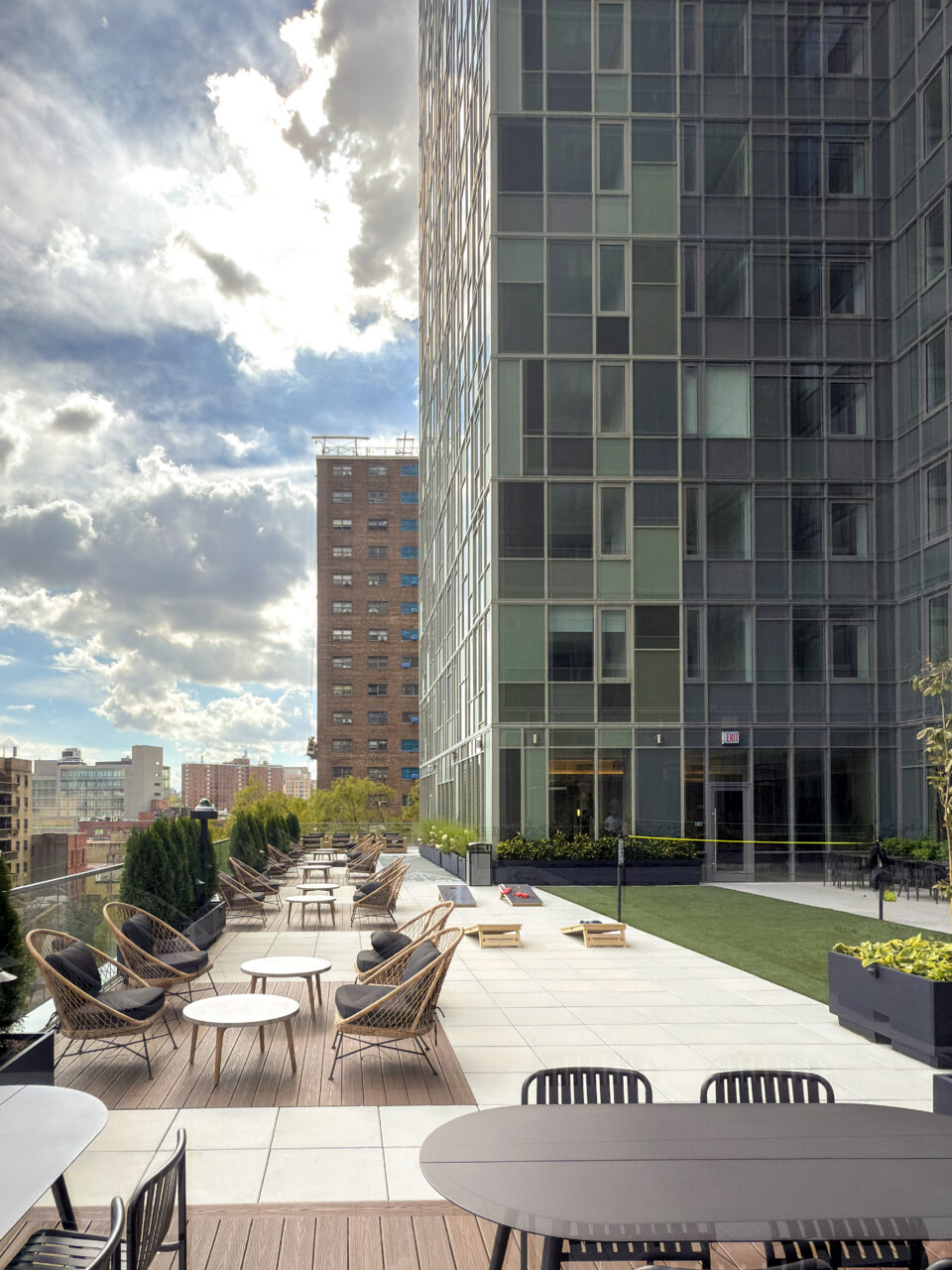
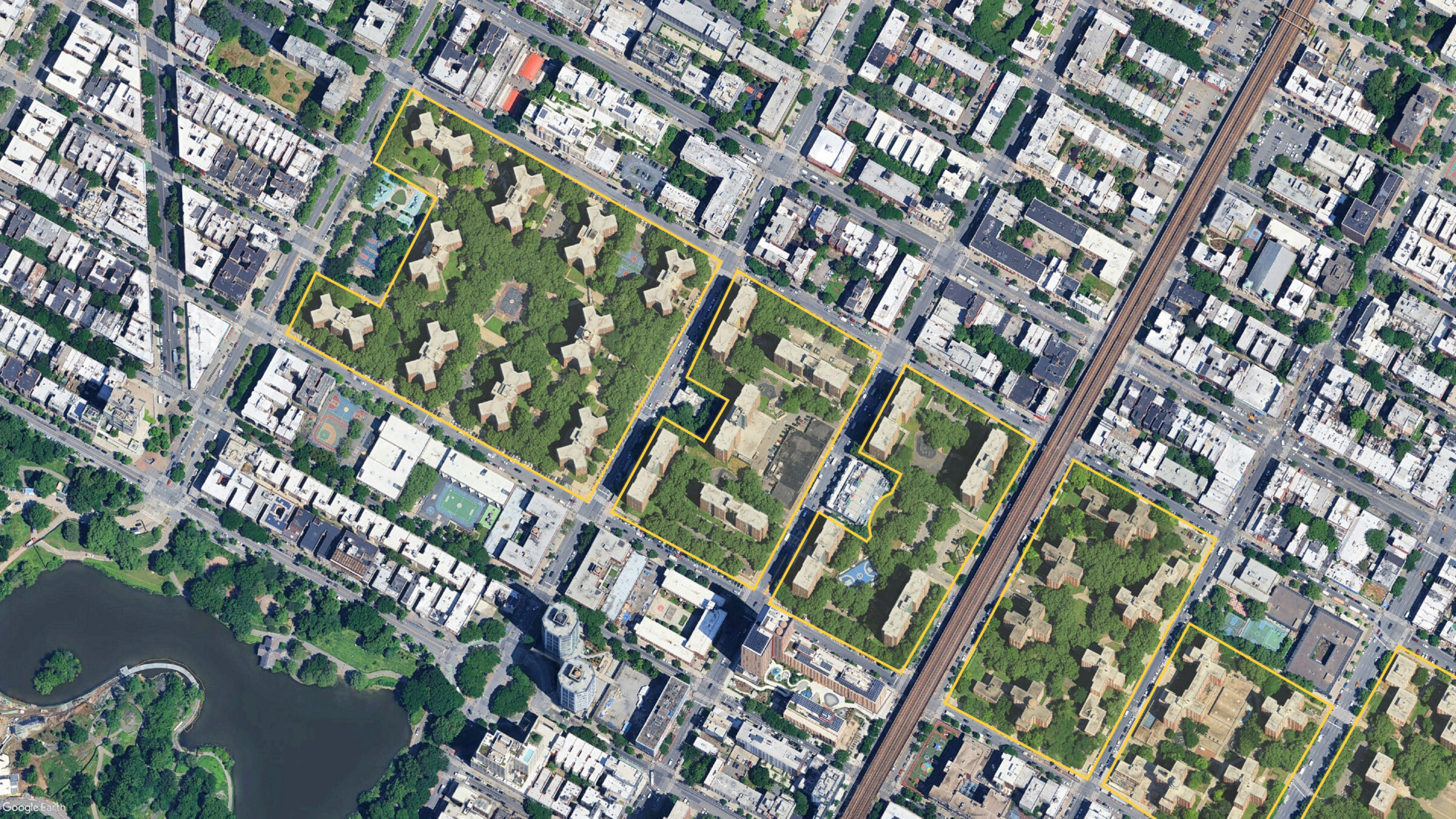
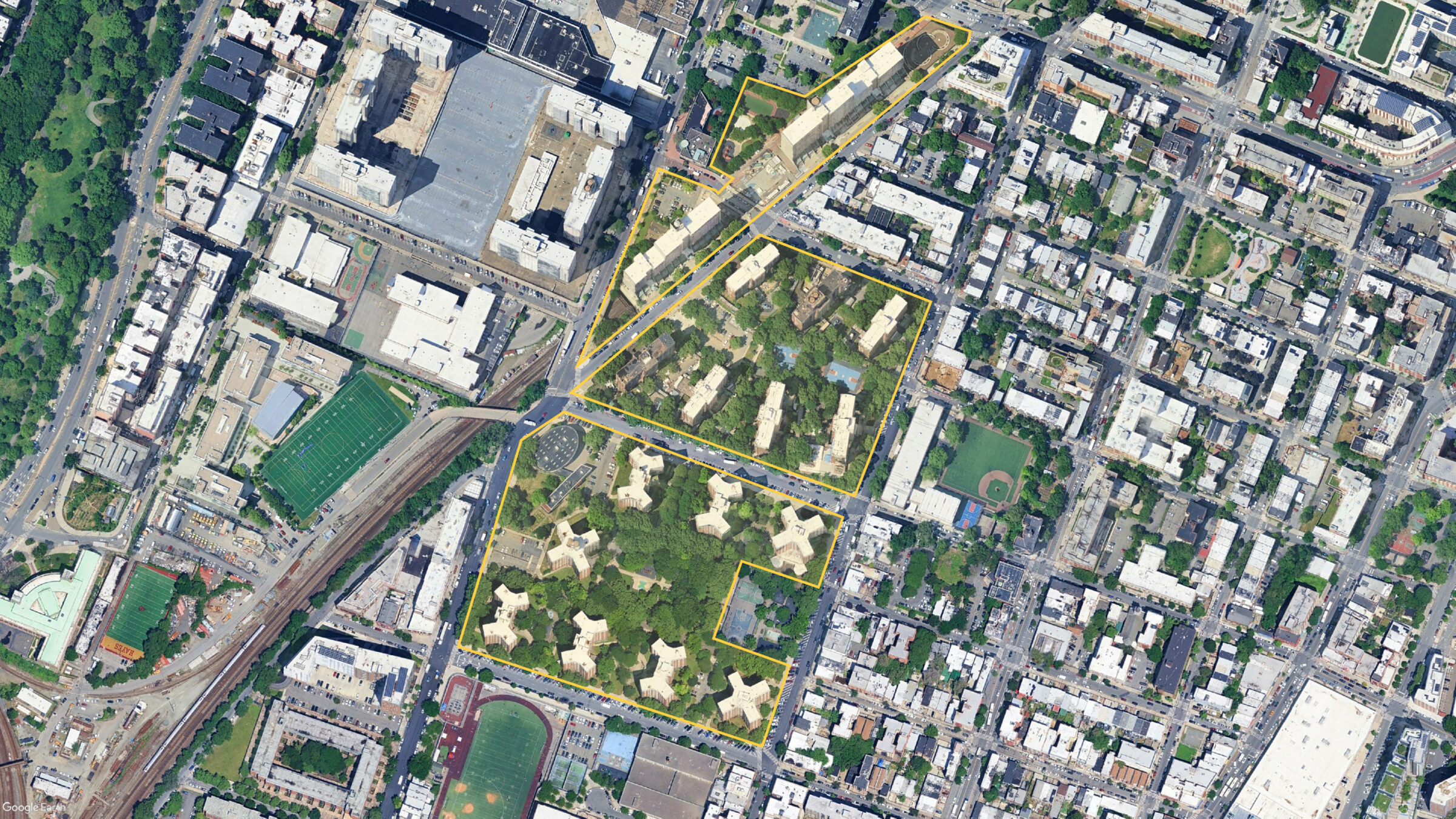
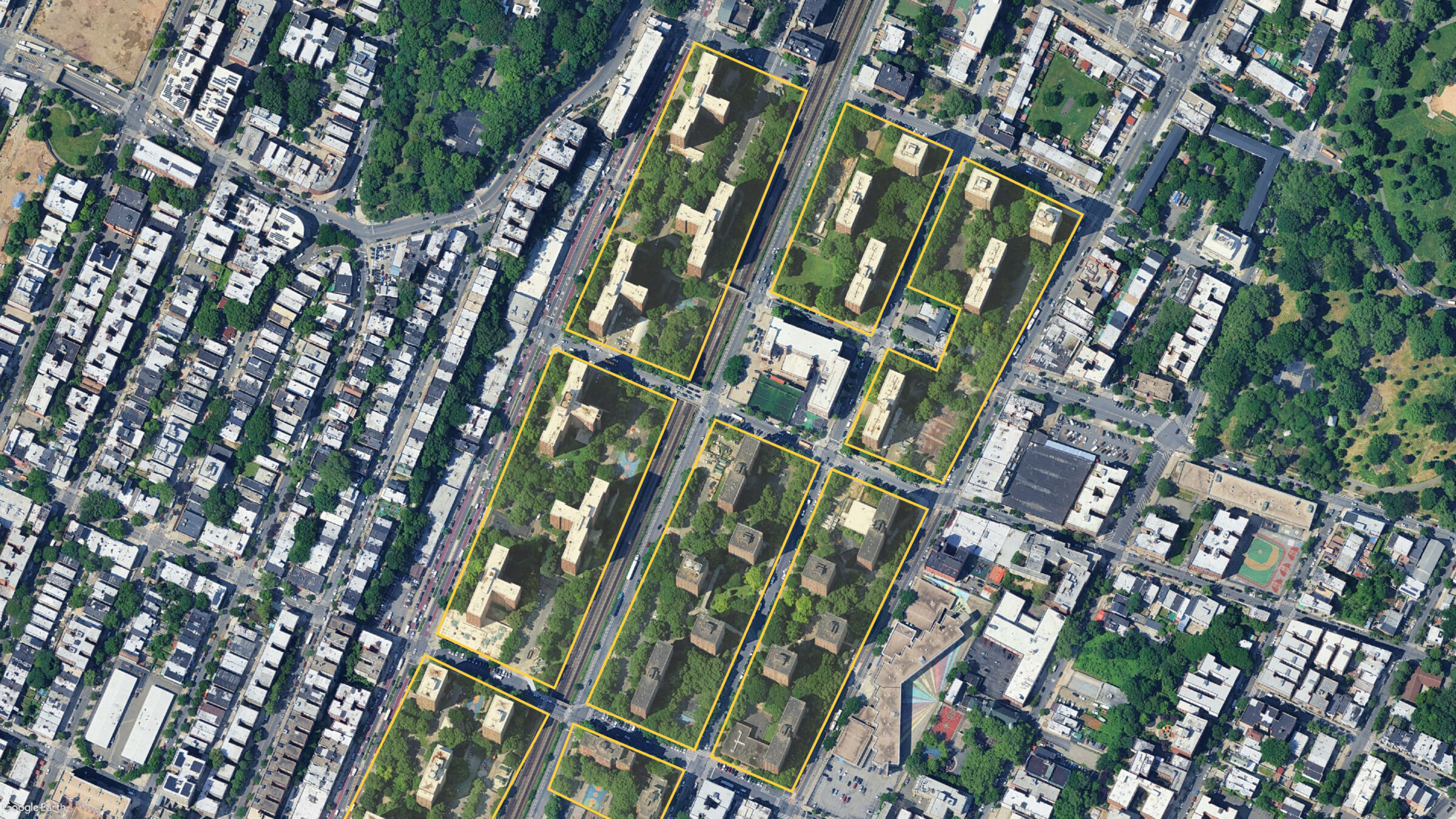
NYCHA’s superblocks repeat across the five boroughs, large campuses with underbuilt land and unused air rights that current zoning could accommodate. At Manhattanville alone, nearly 200,000 square feet of allowable floor area remain unbuilt. Multiplied across the city, the untapped potential is enormous.
New York, NY